Build with Confidence: How to Use Your ISA and UK Tax Allowances This Year
.jpg)
Financial progress starts with knowledge. By learning the key allowances and how an ISA shelters growth and income, you can build a plan that reliably supports your goals from one tax year to the next.
The UK offers a set of allowances that can meaningfully reduce the tax you pay on investment growth and income. Pair those with a Stocks and Shares ISA and you’ve got a straightforward way to keep more of your returns without adding complexity. In this guide, we break down the key 2025/26 allowances in plain English and show how a Quilter Invest Stocks and Shares ISA can help you put them to work - confidently, consistently, and on your terms.
Your ISA Allowance
You can contribute up to £20,000 in your Stocks and Shares ISA in the 2025/26 tax year (6 April 2025 to 5 April 2026). Any unused allowance cannot be carried forward, so it’s worth making the most of it before the tax year resets.
The Cash ISA limit will be lowered to £12,000, with this change coming into force in 2027. You may want to add anything extra to your Stocks and Shares ISA to make up the difference.
ISA allowance tip:
If your ISA offers flexible features, you can withdraw money and add it back within the same tax year without reducing your annual allowance. It’s a useful way to stay in control of your cash flow while still making the most of your ISA entitlement. Quilter Invest’s Stocks and Shares ISA is flexible. Don’t forget, you don’t need to invest, just deposited funds count towards your allowance. It really takes the pressure off if you aren’t sure what you like to invest in yet.
Tax treatment depends on your individual circumstances and may be subject to change in the future. When investing your capital is at risk. The value of your investments can go down as well as up, and you may not get back what you originally invested.
Dividend Allowance
For 2025/26, the dividend allowance is £500. Above this amount (earned outside an ISA), dividends are taxed according to your income band at 8.75% (basic rate), 33.75% (higher rate) or 39.35% (additional rate). Dividends earned inside an ISA are tax free.
Note: From 2026/27, the basic and higher‑rate percentages are set to increase by two percentage points.
Capital Gains Tax (CGT) Allowance
Your annual CGT exemption is £3,000 in 2025/26. Gains above this are typically taxed at 10% (if you remain within the basic‑rate band) or 20% (higher/additional rate), depending on the asset and your overall income level.
Important: Investments held in an ISA are not subject to CGT.
Personal Savings Allowance (Interest)
If you earn savings interest outside tax‑efficient wrappers, you can receive up to £1,000 tax‑free as a basic‑rate taxpayer, £500 as a higher‑rate taxpayer, and £0 as an additional‑rate taxpayer, subject to how your other income interacts with the starting rate for savings.
Your ISA Use Checklist (2025/26)
- Use your £20,000 allowance before 5 April - it can’t be carried forward.
- Shelter dividends inside your ISA now that the dividend allowance is £500.
- Hold growth assets in your ISA to avoid CGT above the £3,000 threshold.
- Review where your interest‑generating cash sits, given the Personal Savings Allowance limits.
- Check for consistency - do your contributions and investments still match your goals?
- Keep admin simple - you don’t need to report ISA income or gains on a Self-Assessment return.
More tax-efficient tips
Alongside your annual allowances and tax‑efficient accounts, there are a few additional ways to help strengthen your long‑term plans:
- Salary sacrifice schemes: Depending on your workplace benefits, you may be able to redirect part of your gross salary into things like pension contributions, childcare or an electric vehicle. It’s a simple, effective way to keep more of what you earn while supporting the things that matter to you.
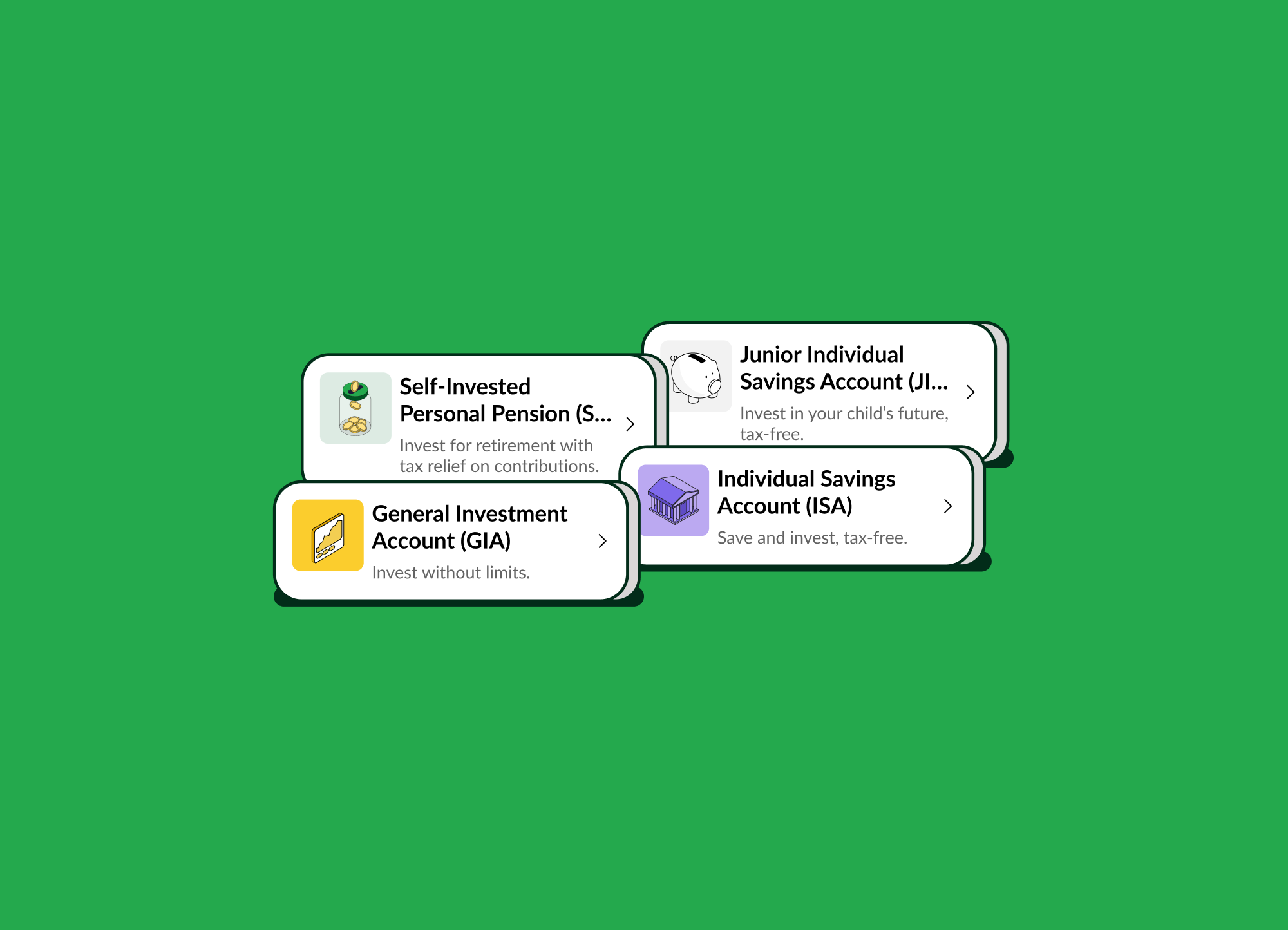
- Junior ISAs: If you’re planning for a child’s future, a Junior ISA can be a meaningful way to build long‑term financial security on their behalf. Contributing regularly helps create a tax‑efficient pot they can access at 18, whether they’re heading to university, learning to drive or taking their first step toward independence. The allowance for a JISA is £9,000 per tax year.
It’s easy to open a Junior ISA with Quilter Invest. You can also transfer one from elsewhere.
How to Automate Your ISA Contributions
Automating contributions makes it easier to stay consistent, avoid last minute funding, and use more of your ISA allowance over the tax year. With Quilter Invest, you can choose an amount you want to invest regularly - monthly contributions help you build steadily.
You can set up a Direct Debit in the Quilter Invest app, allowing us to collect your contribution automatically on your chosen date, or turn on Auto Invest, letting you automate both the funding and the investing of each contribution. Select where each payment is invested, such as a particular fund, ETF, or individual stock. Better yet, you can align contributions with payday, so they happen naturally without relying on leftover cash. Review your automated plan once a year to ensure it still suits your goals and keeps you on track with your annual ISA allowance. It’s that simple.
Important information
Figures and thresholds above apply to the 2025/26 tax year. Tax treatment depends on your individual circumstances and may be subject to change in the future.
When investing your capital is at risk. The value of your investments can go down as well as up, and you may not get back what you originally invested.
Information provided by Quilter Invest is for general educational purposes only and is not investment or financial advice.
Source: https://www.gov.uk/browse/tax
Approved by Quilter Invest 27/02/2026

.jpeg)